
A little about me…
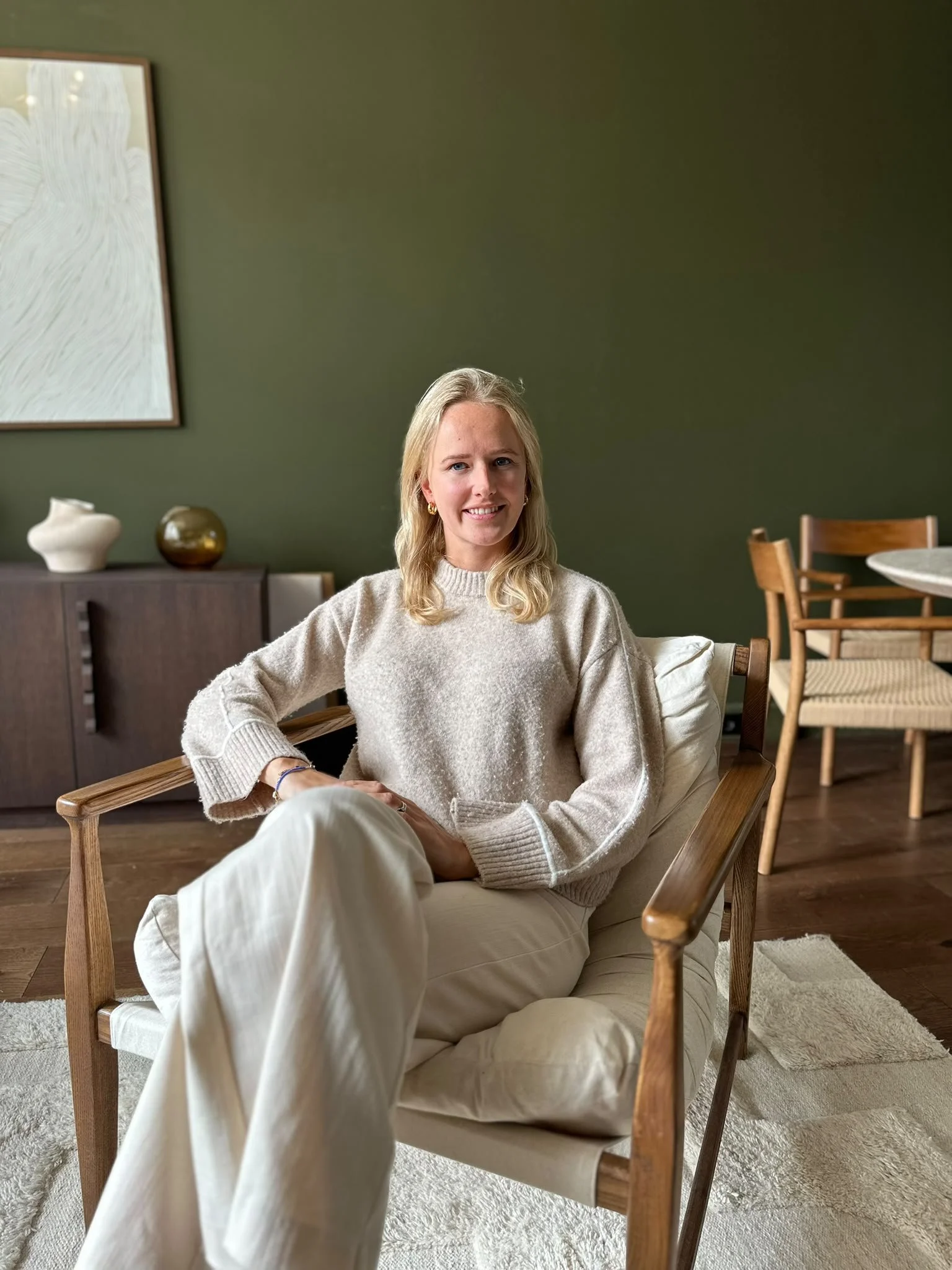
Hi! I'm Millie, a British Psychologist offering individual therapy in Utrecht, the Netherlands.
I’m originally from London and first studied Psychology at the University of Exeter. I later completed my Master’s at University College London, followed by further training in Schema Therapy, Cognitive Behavioural Therapy (CBT) and Acceptance and Commitment Therapy (ACT). Alongside my background in psychology, I’ve also worked across health, fitness and sport, and spent several years living and working in Singapore.
More recently, life has taken me in a new direction. Last year, my husband and I moved to Utrecht, where we’re now building a life in the Netherlands – bringing plenty of new experiences, and a fair bit of adjustment of my own.
For me, a strong therapeutic relationship is at the heart of good therapy. I want our sessions to feel collaborative, open and honest, where you can be completely yourself without worrying about being judged or having all the answers.
Outside the therapy room, I’m happiest when I’m active – running, pilates, or playing tennis or golf. I love sport, good food and travelling, and since moving to the Netherlands, my husband and I have been making the most of having Europe on our doorstep.
My Approach
My approach to therapy is integrative, drawing on Schema Therapy, CBT and ACT. Rather than following one set way of working, we can draw on different approaches depending on what feels most useful to you and what we’re working on together.
We’ll look beyond what you see on the surface and explore some of the questions that might be harder to answer: Why do certain things affect you more deeply than others? Why do the same patterns keep repeating? Are some of the ways you’ve learnt to cope now holding you back? And perhaps most importantly, what do you actually need?
I’m interested in the whole person, because how you’re feeling rarely exists in isolation. It can be connected to your experiences, relationships, the way you see yourself, your physical wellbeing and what’s going on in your life more broadly. Sometimes it’s helpful to look back and understand how the past may be influencing the present; at other times, our focus will be much more on what’s happening in your life now. Often, we’ll move between the two.
Therapy is about connecting the dots. Understanding where certain patterns came from, what you needed then, and what you need now. But it’s also about what you do with that understanding. As we begin to make sense of what may be keeping you stuck, we can also work on what you would like to be different. That might mean learning to respond differently to difficult thoughts and emotions, softening your inner critic, reconnecting with yourself or the people around you, or making meaningful changes in the areas of your life that matter most.
My approach is warm and collaborative. I bring my knowledge and experience as a therapist, but you know yourself and your life better than anyone. We’ll work together to understand what’s going on, make changes that feel meaningful to you, and help you feel better able to navigate whatever life brings next.
Therapeutic Techniques

-
Understanding the deeper patterns that keep repeating.
We will explore how earlier experiences shape the way you see yourself, relate to others and respond when things feel difficult. You might notice the same relationship patterns playing out, struggle with a harsh inner critic, find it difficult to express what you need, or react strongly to situations without quite understanding why. Together, we can make sense of where these patterns came from, recognise when old ways of protecting yourself are taking over, and begin to respond differently – in ways that better reflect who you are and what you need now.
-
Understanding the link between what you think, how you feel and what you do.
CBT looks at how thoughts, feelings and behaviours can influence one another and create cycles that are difficult to break. You might find yourself overthinking, avoiding things that make you feel uncomfortable, constantly seeking reassurance, or holding yourself to impossible standards. These responses can make things feel easier in the moment, while unintentionally keeping the problem going over time. Together, we can understand what’s happening in these moments, question thoughts and beliefs that may be holding you back, and experiment with different ways of responding – helping you break old cycles and feel more able to handle things differently when they come up.
-
Learning to handle difficult thoughts and feelings without letting them take over.
It’s less about getting rid of uncomfortable thoughts and emotions and more about changing your relationship with them. You might find yourself getting caught up in your thoughts, avoiding difficult feelings, or letting fear and self-doubt influence the choices you make. Together, we can practise stepping back from unhelpful thoughts, making room for difficult emotions, and choosing how you want to respond – so you can spend more of your energy on the people, experiences and things that really matter to you.
-
University College London, United Kingdom
September 2024 - September 2025
With Distinction
A specialist Masters in child and adolescent mental health at UCL's Great Ormond Street Institute of Child Health, with a strong clinical focus. The programme covered the assessment and treatment of mental health difficulties, evidence-based psychological therapies, neurodevelopmental disorders and clinical approaches.
-
University of Exeter, United Kingdom
2013 – 2016
Upper Second-Class Honours (2:1)
Accredited by the British Psychological Society (BPS)
-
Dutch Institute of Schema Therapy, Netherlands
40-hour ISST-approved training programme for Schema Therapy
March - October 2026
-
Beck Institute for Cognitive Behavior Therapy
Basics of CBT Essentials I (June - July 2026) - 98%
CBT In Practice Essentials II (July - August 2026) - 98%
-
PESI UK
Acceptance and Commitment Therapy (ACT) Online Intensive
with Dr Richard Sears, PsyD, PhD, MBA, ABPPJune – August 2026
-
PsyGlobal
Training in the Diagnostic and Statistical Manual of Mental Disorders (DSM-5-TR)
May - June 2026
Qualifications & Training
Memberships
-
Professional member – Membership no. 251508
Member of the Netherlands Institute of Psychologists (NIP), the largest professional association for psychologists in the Netherlands. As an NIP member, I follow the NIP Code of Professional Ethics and have access to ongoing professional development, current psychological research and guidance on professional and ethical practice.
-
Member of an international community of therapists focused on ongoing professional development, peer support and reflective practice. Membership includes regular peer supervision, specialist intervision groups and workshops covering therapeutic skills and different approaches to therapy.
-
Professional member of the international Association for Contextual Behavioral Science (ACBS), the professional community supporting research and practice in contextual behavioural science, including Acceptance and Commitment Therapy (ACT). Membership provides access to current research, clinical resources and ongoing professional development.
"Life isn't about waiting for the storm to pass; it's about learning how to dance in the rain."